Beginner Muscle Building Program: The Complete Guide
Starting strength training and want to build muscle effectively? Here is a 3-day/week Full Body program based on fundamental compound exercises.
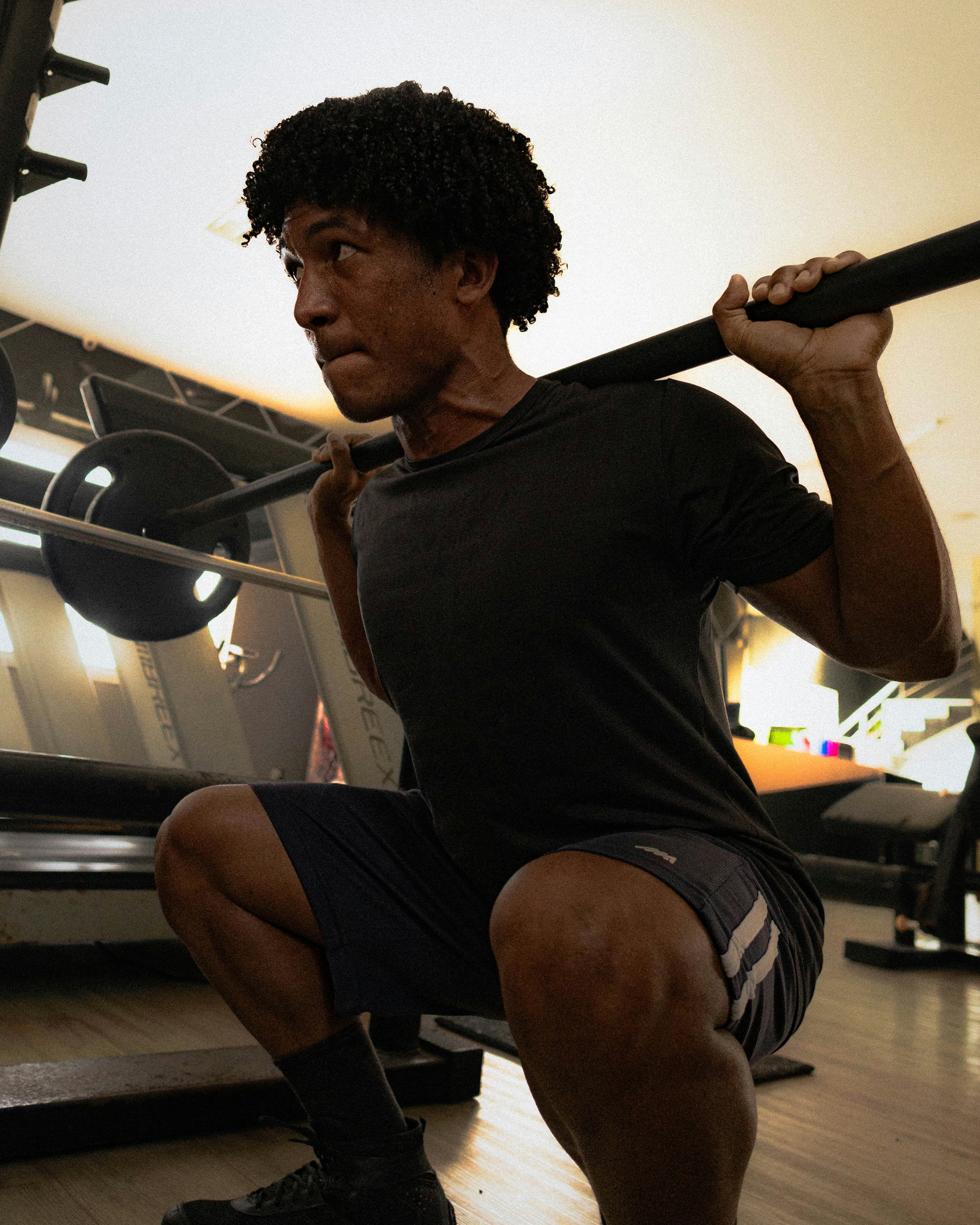
Why Full Body Training Is Best for Beginners
One of the most common beginner mistakes is copying the training split of an advanced bodybuilder or fitness influencer — "chest Monday, back Tuesday, legs Wednesday." These programs are designed for athletes who've been training for years and have highly adapted neuromuscular systems. For a beginner, they leave most potential gains untapped.
A 3x/week Full Body program is what the research consistently recommends for beginners. Here's why:
- Higher stimulation frequency: You train each muscle group 3 times per week instead of once. Since protein synthesis from a training session peaks around 24-48 hours post-workout, weekly frequency is one of the strongest drivers of muscle growth in beginners.
- Faster motor learning: Compound movements like the squat, bench press, and deadlift are complex motor skills. More frequent practice = faster skill acquisition and better form.
- Optimal recovery: By spreading volume across 3 sessions instead of concentrating it in one, each session is manageable, and full recovery between sessions is achievable.
The Warm-Up You Can't Skip
Every session should begin with 10–15 minutes of warm-up. Training cold increases injury risk and reduces performance.
Simple warm-up protocol:
- 5 min light cardio (bike, rowing machine, brisk walk)
- Joint mobility: hips, shoulders, ankles — 10 circles each direction
- Bodyweight activation: 10 goblet squats, 10 push-ups, 10 face pulls with band
- Progressive warm-up sets on your first big lift: 40%, 60%, 80% of working weight
The Full Body Program — Weeks 1 to 12
Frequency: 3 sessions per week, with at least one rest day between sessions. Recommended schedule: Monday / Wednesday / Friday, or Tuesday / Thursday / Saturday.
Alternate between Session A and Session B at each visit. Week 1: A-B-A. Week 2: B-A-B. And so on.
Session A
| Exercise | Sets | Reps | Rest |
|---|---|---|---|
| Barbell Squat | 3 | 8-10 | 2 min |
| Bench Press | 3 | 8-10 | 2 min |
| Barbell Row | 3 | 8-10 | 2 min |
| Overhead Press | 3 | 10-12 | 90 s |
| Dumbbell Curl | 3 | 12 | 60 s |
| Tricep Pushdown | 3 | 12 | 60 s |
Session B
| Exercise | Sets | Reps | Rest |
|---|---|---|---|
| Deadlift | 3 | 6-8 | 2 min |
| Dips (or Incline Press) | 3 | 8-10 | 2 min |
| Pull-ups (or Lat Pulldown) | 3 | 8-10 | 2 min |
| Dumbbell Shoulder Press | 3 | 10-12 | 90 s |
| Goblet Squat | 3 | 12-15 | 90 s |
| Plank | 3 | 30-60 s | 60 s |
Progressive Overload: The Non-Negotiable Principle
Progressive overload is the most important concept in strength training. It means systematically making your training harder over time — either by adding weight, reps, or sets. Without progressive overload, your body has no reason to adapt, and muscle growth stalls.
The simple progression rule:
- You complete all planned reps on all sets with good form → add 2.5 kg (5 lbs) at the next session for that exercise
- You can't complete all reps → keep the same weight and work toward the top of the rep range before adding load
Track your workouts. Write down every exercise, weight used, and reps completed. Without a training log, you're guessing — and guesswork is the enemy of consistent progress.
How to Handle Missed Sessions
Real life doesn't always follow a perfect program. Here's how to adjust:
- Missed 1 session: Simply resume from where you left off
- Missed 1-2 weeks: Reduce weights by 10-15% for the first session, then rebuild quickly
- Missed a month or more: Start at 60-70% of your previous weights and rebuild over 2-3 weeks
Consistency over months matters far more than perfection in any single week.
Planned Deload Weeks
Every 4-6 weeks, schedule a deload week: cut weight by 40-50% and reduce set count by half. Deload weeks allow your joints, tendons, and nervous system to fully recover.
This feels counterproductive, but athletes who incorporate regular deloads make faster long-term progress than those who push through every week without rest. Recovery is where adaptation happens.
Nutrition: The Other Half of the Equation
Training without adequate nutrition is like building a house without materials. Three nutritional fundamentals for beginners building muscle:
1. Calorie surplus: You need a positive energy balance to build muscle. Calculate your TDEE and add 300-500 kcal/day. For a true beginner, even a modest surplus of 200-300 kcal is often sufficient.
2. Protein: Aim for 1.8–2 g per kg of body weight daily. This is the single most important nutritional variable for muscle gain. Prioritize chicken, eggs, fish, Greek yogurt, and cottage cheese.
3. Carbohydrates: The primary fuel source for high-intensity training. Don't fear carbs — rice, oats, sweet potato, and fruit support your training performance and recovery.
What to Expect Week by Week
Weeks 1-3: Significant soreness (DOMS), especially after the first few sessions. You're learning movement patterns, not yet maximizing muscle tension. Weights will feel awkward at first — that's normal.
Weeks 4-8: Rapid strength gains begin. These are primarily neurological adaptations — your brain and nervous system become more efficient at recruiting muscle fibers. You'll add weight to the bar frequently.
Weeks 8-12: True hypertrophy (actual muscle growth) becomes more visible. Shoulders look broader, chest more defined, arms more muscular. This is when the work really starts to show.
Beyond week 12: Progress slows compared to the beginner phase but becomes structural and lasting. This is when consistency compounds into a genuinely transformed physique.
Patience is the hardest skill to develop in strength training — and the most rewarding.
Frequently Asked Questions
How many days per week should a beginner lift weights?+
3 days per week is optimal for beginners. This frequency allows each muscle group to be trained 3 times per week (Full Body format), accelerates motor learning, and allows full recovery between sessions. More frequent training is counterproductive until your body adapts to the training stimulus.
What exercises should beginners focus on?+
Beginners should prioritize compound movements: squat, bench press, deadlift, barbell row, and overhead press. These exercises recruit the most muscle mass per movement, provide the strongest strength stimulus, and build the technical foundation for all future training.
How long before you see muscle gains as a beginner?+
Strength gains appear within 2-4 weeks (neurological adaptations — your nervous system gets more efficient). Visible muscle changes typically appear around weeks 8-12. Significant body composition changes are noticeable at the 3-6 month mark with consistent training and adequate nutrition.
Is it normal to be very sore after the first few workouts?+
Yes — DOMS (Delayed Onset Muscle Soreness) is normal and expected in the first 1-3 weeks. It is not an indicator of a good workout (or a bad one). Soreness decreases significantly as your body adapts to training. Light movement and adequate protein and sleep are the best remedies.
Scientific references
A strength training enthusiast for over 6 years, I write every article starting from meta-analyses and primary studies — not forums or sponsored magazines. Learn more