Best Creatine 2025: Comparison and Buying Guide
Creatine is the most studied sports supplement in the world. But which form to choose? Monohydrate, HCl, ethyl ester... We break it down with real data.
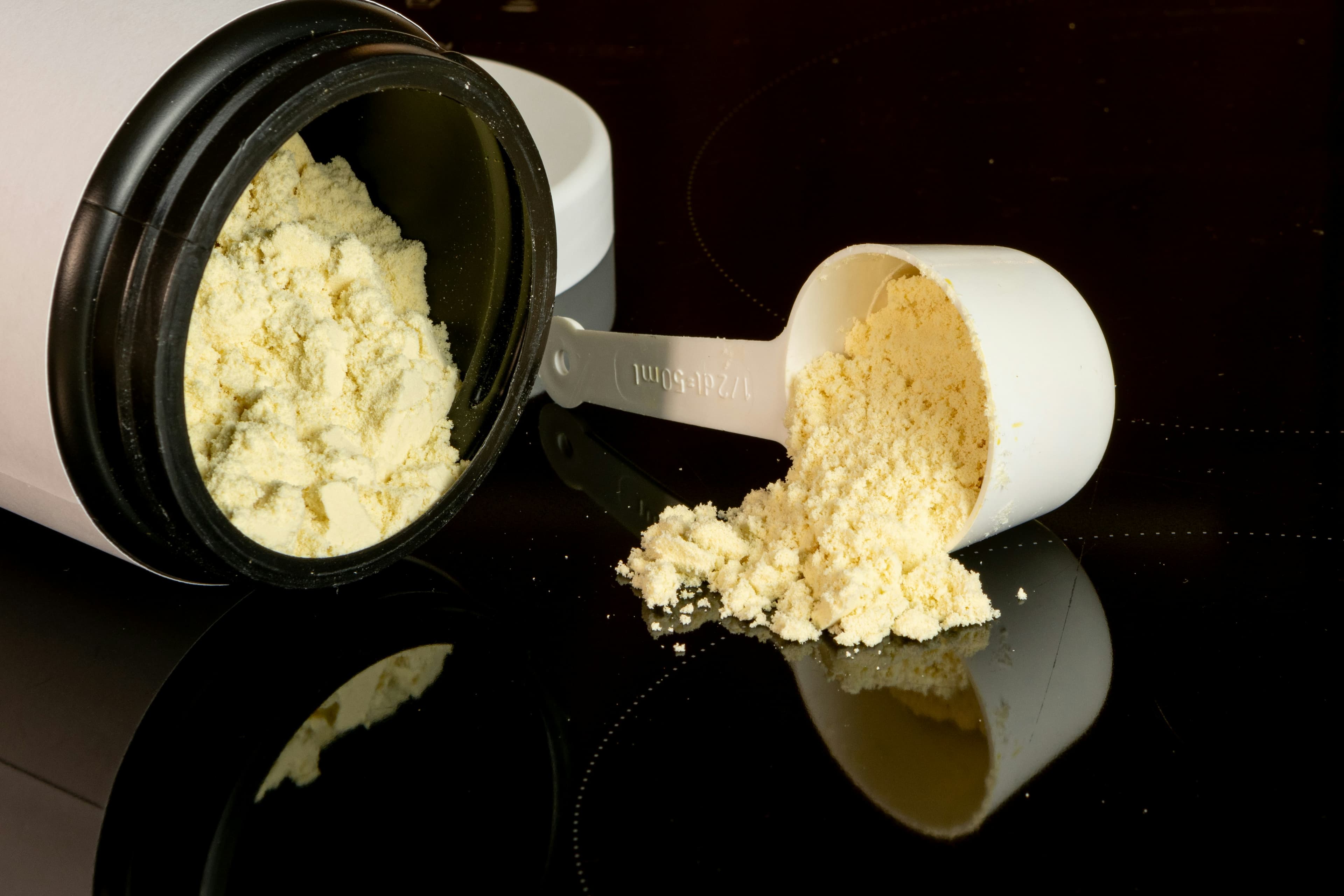
How Creatine Works: The Biochemistry Explained
Creatine is a naturally occurring compound synthesized by the body from three amino acids: glycine, arginine, and methionine. It's also found in red meat and fish — but in quantities too small to fully saturate muscle stores without supplementation.
In muscle tissue, creatine is stored as phosphocreatine (PCr). During short, explosive, high-intensity efforts — a heavy squat, a max-effort sprint, the final reps of a set — your muscles consume ATP (adenosine triphosphate) at a rate faster than aerobic metabolism can replenish it. Phosphocreatine steps in to rapidly regenerate ATP, allowing you to maintain power output for longer before hitting a wall.
The result: more reps at a given weight, more weight at a given rep count, and faster recovery between high-intensity sets.
What over 1,000 published studies confirm:
- Strength performance improvement: +5 to 15% over 4-12 weeks
- Increased lean muscle mass (through both enhanced training + direct cell volumization)
- Faster recovery between high-intensity sets
- Greater total training volume capacity
- Documented cognitive benefits: working memory, mental fatigue resistance
Creatine Forms Compared: What the Research Actually Shows
The supplement market is flooded with "advanced" creatine forms marketed as superior to monohydrate. Here's an honest breakdown:
Creatine Monohydrate — The Undisputed Standard
The most studied, most affordable, and according to every rigorous meta-analysis, as effective or more effective than any alternative form. Over 95% of creatine research uses monohydrate.
Creapure® label: the gold standard quality marker. Manufactured in Germany by AlzChem, certified 99.9%+ pure creatine, free from heavy metals and contaminants. This is the form used in the majority of peer-reviewed studies.
Creatine HCl (Hydrochloride)
Higher water solubility, meaning less powder needed to dissolve. May cause less bloating for sensitive individuals. Typical dose: 1-2 g vs 3-5 g for monohydrate.
No evidence of superior muscle saturation or greater strength/size gains. Price is 3-5x higher per serving. Verdict: valid alternative for those with digestive sensitivity, but no performance advantage.
Kre-Alkalyn (Buffered Creatine)
Marketed as "more stable" at higher pH and "better absorbed." A direct comparison study (Journal of the International Society of Sports Nutrition, 2012) found no difference in muscle creatine levels or performance between Kre-Alkalyn and monohydrate. Verdict: marketing > science.
Creatine Ethyl Ester
Claims better absorption. Reality: it hydrolyzes rapidly into creatinine (a waste product) in the bloodstream, resulting in lower bioavailability than monohydrate. Multiple studies confirm inferior performance. Verdict: avoid.
Micronized Creatine Monohydrate
Standard creatine monohydrate with smaller particle size — mixes better in water with less grittiness. Same efficacy, slightly better mouthfeel. Acceptable choice.
Dosing Protocols
Maintenance Protocol (Recommended for Most People)
3-5 g per day, every day — no loading phase required.
Muscle stores reach full saturation in approximately 3-4 weeks at this dose. Simpler, more gut-friendly, and produces identical long-term results to loading protocols.
Loading Protocol (Faster Saturation)
20 g/day for 5-7 days (split into 4 × 5 g doses throughout the day), then 3-5 g/day maintenance.
Full muscle saturation reached in ~1 week. Useful if you want faster initial results — for example, before a competition or test. Potential side effects: gastrointestinal discomfort, bloating.
Note: the loading phase is never necessary — it only accelerates the timeline to saturation.
Timing: Does It Matter?
The research is nuanced here. A notable study (Antonio & Ciccone, 2013) found a slight advantage for post-workout creatine vs pre-workout in terms of body composition after 4 weeks. The difference was modest, but it suggests post-workout is a reasonable default.
Practical recommendations:
- Take with a carbohydrate-containing meal — insulin may enhance creatine transport into muscle cells
- Rest days: continue taking 3-5 g to maintain muscle saturation (saturation drops if you skip days consistently)
- Daily consistency matters more than precise timing
Creatine and Water Retention: Separating Myth from Reality
Within the first 1-2 weeks of supplementation, most people gain 0.5-1.5 kg of body weight. This is intramuscular water retention — water stored inside muscle cells, not under the skin.
This is not fat gain. Intramuscular water retention actually contributes to:
- Increased cell volume (slight anabolic signal)
- Better-feeling muscle pumps
- Marginally improved performance (more hydrated muscle = better contractile function)
This water weight disappears within 1-2 weeks of stopping creatine. If you're a weight-class athlete cutting before competition, plan your creatine use accordingly.
Stay well hydrated: aim for 2.5-3 L of water daily while supplementing.
Creatine for Women: An Overlooked Benefit
Creatine has historically been marketed primarily to men, but the evidence is clear: women benefit equally. Studies on female athletes show comparable gains in strength, lean mass, and training performance. Women may actually experience somewhat less water retention than men due to physiological differences in muscle creatine baseline levels.
Women with lower dietary creatine intake (vegans, vegetarians, or those who eat little red meat) may see even more pronounced benefits from supplementation.
Is Creatine Safe? What Long-Term Research Shows
Creatine is one of the most thoroughly safety-tested supplements in existence. Decades of research including studies up to 5 years of continuous use show no adverse effects on kidney function in healthy individuals.
The myth that creatine damages kidneys stems from confusion: creatine metabolism produces creatinine, a kidney filtration marker. When you supplement creatine, creatinine levels rise — but this is a measurement artifact, not kidney damage.
Relative contraindication: if you have pre-existing kidney disease (chronic kidney disease, polycystic kidney disease), consult a physician before supplementing, as creatine clearance may be affected.
Do You Need to Cycle Off Creatine?
No. The concept of "creatine cycles" — taking it for 8 weeks, stopping for 4, repeating — has no scientific support. There is no evidence of desensitization, receptor downregulation, or long-term disadvantage from continuous supplementation. Stopping simply reduces muscle creatine stores back to baseline over several weeks, eliminating the performance benefit.
For most people, taking 3-5 g of creatine monohydrate daily, year-round, is the optimal and simplest protocol.
Frequently Asked Questions
What is the best type of creatine for muscle building?+
Creatine monohydrate is the most scientifically supported form and the most cost-effective. Alternative forms (HCl, Kre-Alkalyn, ethyl ester) show no superiority in head-to-head studies despite costing significantly more. Choose monohydrate with the Creapure® label for guaranteed purity.
How much creatine should you take per day?+
3 to 5 g of creatine monohydrate per day is sufficient to saturate muscle stores in 3-4 weeks. An optional loading phase of 20 g/day for 5-7 days speeds up saturation but is not necessary. Consistency matters more than dose.
Should you cycle off creatine?+
No — there is no scientific evidence supporting creatine cycling or mandatory rest periods. Continuous supplementation at 3-5 g/day is safe, effective, and does not cause desensitization. Stopping simply depletes muscle creatine stores over several weeks.
Does creatine make you gain fat?+
No. The 0.5-1.5 kg weight gain seen in the first weeks of supplementation is intramuscular water retention — water stored inside muscle cells. It is not body fat. This water weight disappears within weeks of stopping creatine and does not affect body fat percentage.
Scientific references
A strength training enthusiast for over 6 years, I write every article starting from meta-analyses and primary studies — not forums or sponsored magazines. Learn more