The Best Leg Exercises for Building Muscle
Quads, hamstrings, glutes, calves: your legs make up nearly half your muscle mass. Here are the exercises that actually build them, and how to organize them.
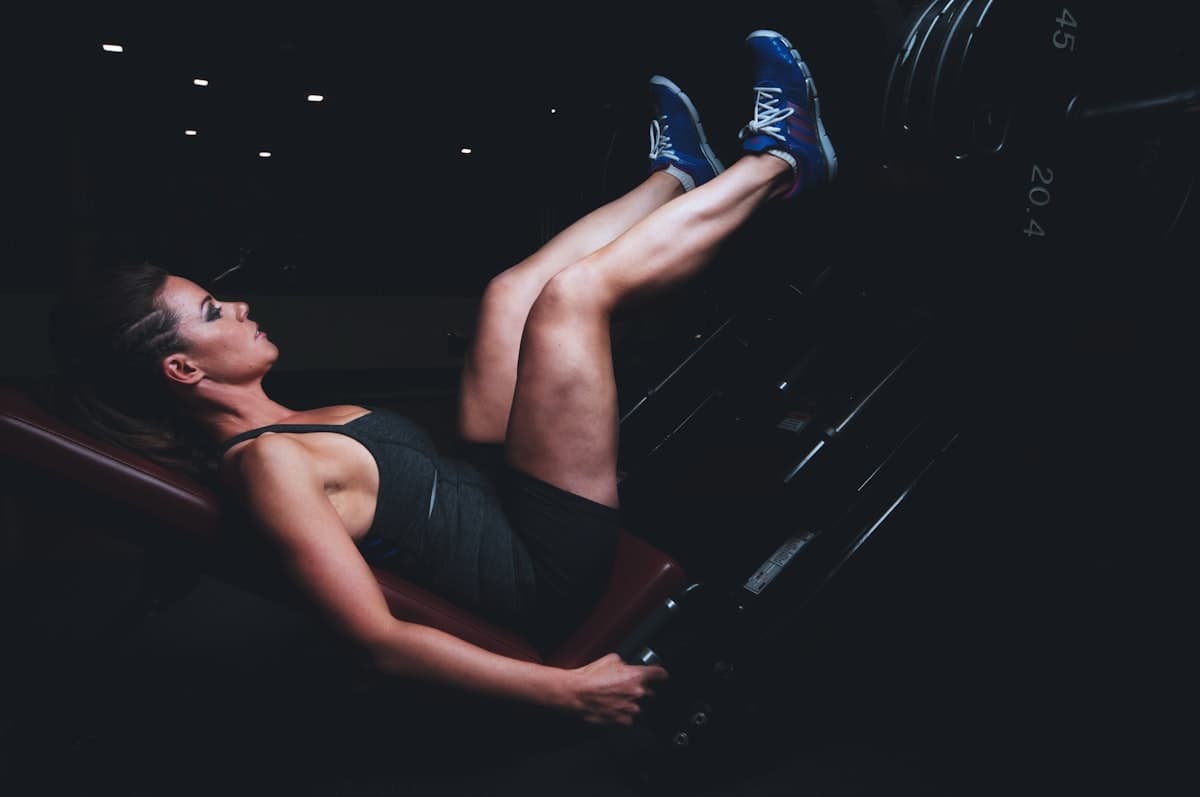
Why skipping legs is a mistake
Let's be honest: everyone loves training the upper body, and many skip legs. It's the most common mistake in the gym. Yet your legs make up about 45% of your total muscle mass. Ignoring them means leaving half your development potential on the table.
Beyond aesthetics, intense leg training has a systemic effect: big compound movements like the squat and deadlift recruit an enormous amount of muscle and strongly stimulate overall progress. You build a balanced, functional physique, not an upper body perched on matchsticks.
Quick anatomy: what you need to train
The leg is made up of four main groups, and each needs dedicated work:
- Quadriceps: at the front of the thigh, they extend the knee. Worked by the squat, leg press, lunges.
- Hamstrings: at the back, they flex the knee and assist hip extension. Trained by the Romanian deadlift and leg curl.
- Glutes: the most powerful muscles in the body, drivers of hip extension. Deep squats and hip thrusts target them.
- Calves: often forgotten, they require specific work since other exercises barely engage them.
The best exercises, by group
For the quads
The barbell squat remains king: no other movement loads the quads as much while also recruiting glutes and core. If technique holds you back, the leg press lets you load heavy safely. Leg extensions isolate the quad at the end of the session to finish the job.
For the hamstrings
The Romanian deadlift (semi-straight legs) stretches and intensely loads the hamstrings — it's their best builder. Complement with the leg curl (lying or seated) to isolate knee flexion.
For the glutes
The hip thrust has become a reference: it places maximal load directly on hip extension. Deep squats and walking lunges complement it effectively.
For the calves
Calves contain a high proportion of endurance fibers: they respond well to high volume. Alternate standing raises (straight legs, targets the gastrocnemius) and seated raises (bent knee, targets the soleus), in sets of 12 to 20 reps with a full contraction.
How to structure a leg session
Here is a complete, balanced session, usable one to two times per week:
| Exercise | Sets | Reps |
|---|---|---|
| Barbell squat | 4 | 5-8 |
| Romanian deadlift | 3 | 8-10 |
| Leg press | 3 | 10-12 |
| Lying leg curl | 3 | 10-15 |
| Standing calf raises | 4 | 12-20 |
Always start with the heavy compound movements when your energy is highest, then move on to isolation. Keep 1 to 2 reps in reserve on most sets to preserve technical quality.
The volume that drives progress
Research places the optimum between 10 and 20 weekly sets per muscle group for hypertrophy. For the legs, that means spreading your sets across quads, hamstrings and calves over the week. Below 10 sets, the stimulus is too weak; above 20, recovery becomes difficult and returns diminish.
The key remains progressive overload: without a gradual increase in loads or reps, the body has no reason to build extra muscle. Track your performance session after session.
Common mistakes to avoid
- Squats too high: descend at least until the thighs are parallel to the floor. Partial range drastically limits development.
- Neglecting the hamstrings: a quad/hamstring imbalance increases the risk of knee injury.
- Forgetting the calves: they'll never grow by accident, they demand dedicated and regular work.
- Going too fast: control the lowering (eccentric) phase over 2 to 3 seconds to maximize tension.
Summary
- Legs = nearly half your muscle mass, impossible to neglect
- Cover the four groups: quads, hamstrings, glutes, calves
- Base your session on the squat and Romanian deadlift
- Aim for 10 to 20 weekly sets, intelligently distributed
- Apply progressive overload and control your range of motion
A good leg session is hard, and that's normal. It's precisely this difficulty that makes it the most powerful lever of progress in your training.
Frequently Asked Questions
How often should you train legs per week?+
Two leg sessions per week generally produce better gains than one, since muscle protein synthesis stays elevated 24 to 48 hours after training. For a beginner, one complete leg session within a three-times-a-week full body program is plenty to start.
Is the squat enough to develop the legs?+
The squat is the best foundational exercise, but it primarily works the quads and glutes. For balanced development you need to add a hamstring movement (Romanian deadlift or leg curl) and specific calf work, which squats barely stimulate.
Why aren't my legs growing?+
The three most common causes are: insufficient volume (fewer than 10 weekly sets), a lack of range of motion (squats too high), and no progressive overload. Legs handle heavy loads daily, so they need an intense and increasing stimulus to adapt.
Should you train legs heavy or light?+
Both have their place. Compound exercises (squat, leg press) respond well to heavy loads in the 5 to 8 rep range, while lunges, leg extensions and leg curls are more effective in sets of 10 to 15 reps. Varying rep ranges optimizes development.
A strength training enthusiast for over 6 years, I write every article starting from meta-analyses and primary studies — not forums or sponsored magazines. Learn more