Deadlift: Technique, Mistakes and Progression
The deadlift is the most complete exercise in strength training, but also the riskiest when technique is poor. Here is how to perform it correctly, step by step.
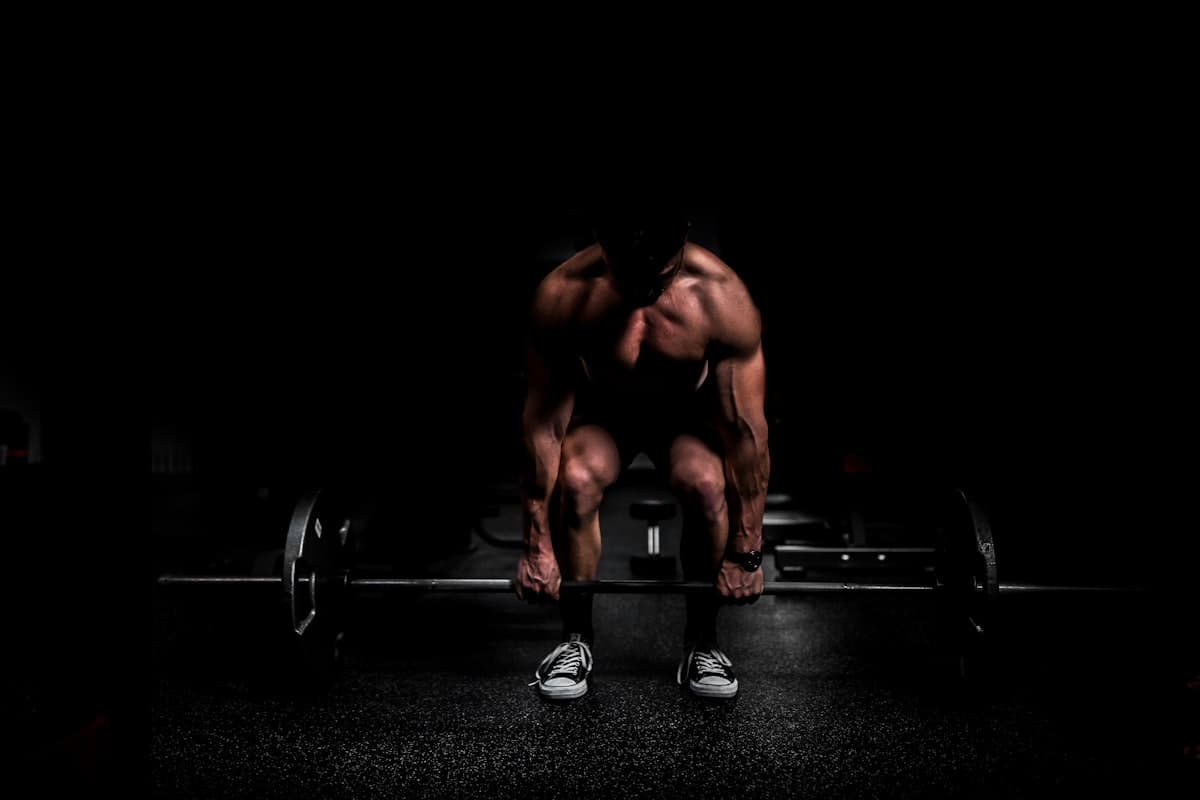
Why the deadlift is essential
If I had to keep just one exercise, it would be this one. The deadlift recruits more muscle mass than any other movement: back, glutes, hamstrings, traps, forearms, core — the whole posterior chain works in synergy. It's the most complete and functional exercise there is.
But this power has a downside: performed with poor technique, it's also one of the riskiest. The good news is that correct technique can be learned, and once mastered, the deadlift becomes a remarkably safe exercise.
The starting position
Everything is decided before you even lift the bar. Set up like this:
- Feet hip-width apart, the bar over the middle of the foot
- Shins close to the bar (it should almost touch them)
- Hands just outside the legs, overhand or mixed grip
- Neutral back: neither rounded nor overly arched
- Shoulders slightly ahead of the bar
- Gaze forward or slightly down
Before pulling, take a deep breath and brace your abdomen as if about to take a punch. This intra-abdominal pressure stabilizes your spine — it's your natural belt.
The movement, phase by phase
The lift
Push into the floor with your legs as if trying to push the earth away beneath your feet. The bar rises along your shins, staying glued to the body at all times. Hips and shoulders rise at the same pace. Once the bar passes the knees, drive your hips forward to finish standing, braced.
The lockout
At the top, stand tall, glutes contracted, without hyperextending the back (don't lean back). Shoulders down and back.
The descent
Reverse the movement: first push your hips back, then bend your knees once the bar passes them. Keep the back neutral and the bar close to the body. Control the descent, don't drop the load.
The mistakes that injure
- Rounded back: the most dangerous mistake. Under heavy load, a flexed back places enormous strain on the intervertebral discs. Always keep the back neutral and braced.
- Bar drifting from the body: the further the bar moves away, the more the lever arm on your back increases. Keep it close.
- Pulling with the back before the legs: the legs initiate the movement, not the back straightening first.
- Hyperextension at the top: leaning back at lockout needlessly compresses the lower back.
How to progress intelligently
The deadlift is very demanding on the nervous system. There's no need to take it to failure every session. Apply progressive overload in a measured way:
- Work in sets of 3 to 6 reps for strength, 6 to 10 for hypertrophy
- Increase the load by 2.5 to 5 kg only when all your sets are clean
- Keep 1 to 2 reps in reserve: technique degrades quickly with fatigue
- One to two deadlift sessions per week is plenty
Do you need a lifting belt?
The belt helps on very heavy loads (above 80-85% of your max) by increasing intra-abdominal pressure. But don't become dependent: training without a belt on moderate loads strengthens your natural bracing. Reserve it for the heaviest sets.
Summary
- The deadlift is the most complete exercise: the whole posterior chain
- Safety comes from technique, not avoidance
- Neutral back and bracing are non-negotiable
- Keep the bar glued to the body through the full range
- Work in 3 to 10 reps, without systematically going to failure
- Progress in small increments, technique first
Take the time to master the movement with light loads. A few weeks of learning will give you years of safe progress.
Frequently Asked Questions
Is the deadlift dangerous for your back?+
No, when technique is correct. The danger comes from a rounded back under load, not the movement itself. Performed with a neutral back and solid bracing, the deadlift actually strengthens the posterior chain and protects the back long-term.
What weight to start the deadlift with?+
Start with an empty bar or a light load to master the movement above all. Technique must be automatic before adding weight. A beginner can progress quickly, but the absolute priority remains execution quality, not load.
How many reps for the deadlift?+
For strength, sets of 3 to 6 reps are ideal. For hypertrophy, 6 to 10 reps work well. Beyond 10 reps, fatigue degrades technique and increases injury risk, which makes long sets not recommended on this exercise.
Should you use straps on the deadlift?+
Straps are useful on heavy sets when grip becomes the limiting factor. But training without straps strengthens the grip, an asset for all other exercises. A good approach: train without straps as long as possible, and bring them out only on the heaviest sets.
A strength training enthusiast for over 6 years, I write every article starting from meta-analyses and primary studies — not forums or sponsored magazines. Learn more