Working Out at Home: Can You Build Muscle Without a Gym?
No gym, little equipment? The science is clear: you can build muscle at home. Here is how, what research says about bodyweight training, and a complete program.
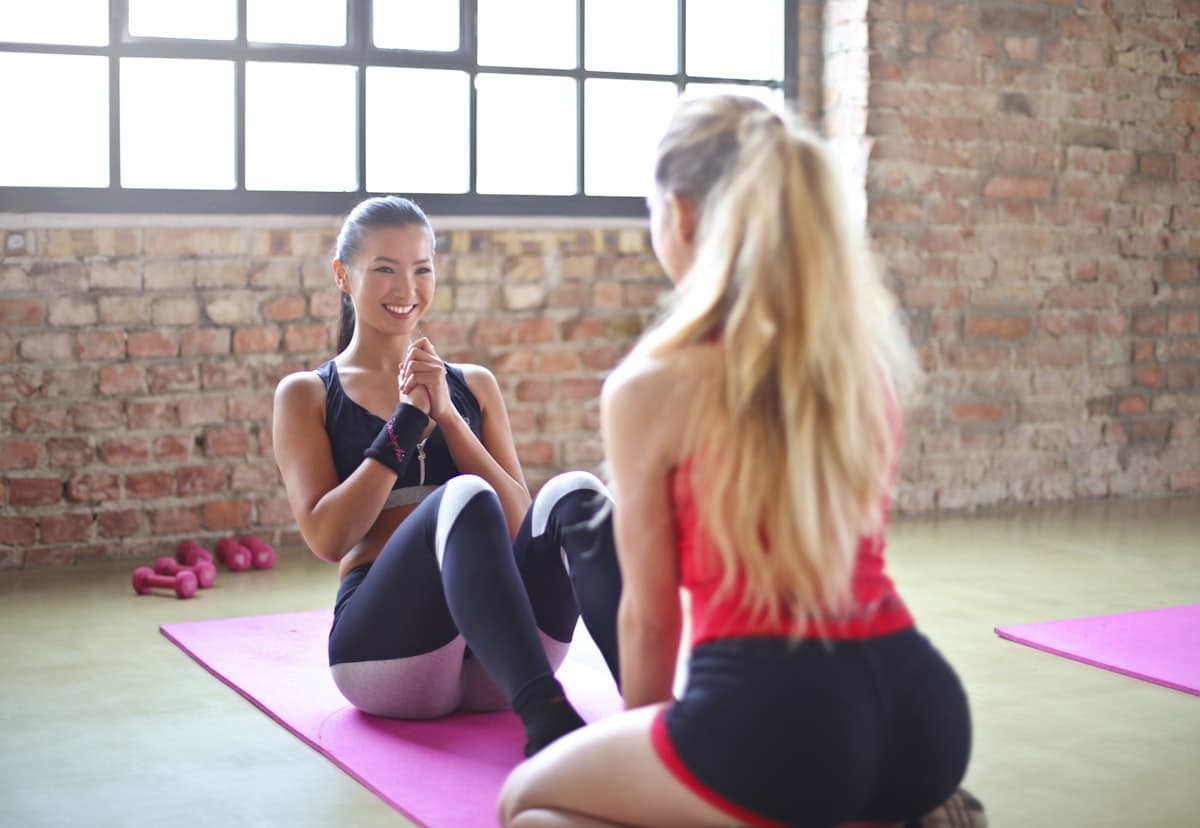
No gym, no excuse
"I can't train, I don't have a gym." It's one of the most widespread — and least founded — excuses. The science is clear: you can build muscle at home, with little or no equipment. You just need to understand why, and above all how.
This article draws on what research actually says about hypertrophy to show you that your living room can be a perfectly effective gym.
What actually builds muscle
To understand why home training works, you need to know what triggers muscle growth. The central factor is the mechanical tension applied to the muscle, combined with an effort close to failure.
The crucial — and counterintuitive — point is that it's not the absolute load that matters, but the intensity of effort. A set taken close to failure recruits all the muscle fibers, whether performed with a heavy load on few reps or a light load on many reps.
That's exactly what a landmark study by Morton et al. (2016, published in the Journal of Applied Physiology) demonstrated: trained lifters using light loads (30-50% of max) taken close to failure achieved hypertrophy gains comparable to those using heavy loads (75-90%). The decisive condition: getting close to muscular failure.
The consequence is major for home training: your bodyweight, pushed close to failure, can build muscle as effectively as gym loads.
The key to home training: progressive overload without weights
The real challenge of home training isn't the absence of possible muscle, but the application of progressive overload. In the gym, you add kilos. At home, you have to increase difficulty another way.
Here are the levers to make a bodyweight exercise progressively harder:
- Harder variations: standard push-ups → raised (feet up) → decline → archer → one-arm push-ups
- Increasing reps: the simplest lever at first
- Slowing tempo: a controlled 3-4 second descent increases time under tension
- Reducing rest time: increases density and difficulty
- Unilateral work: one leg or one arm at a time doubles the relative load (lunges, Bulgarian squats, archer push-ups)
- Increasing range of motion: push-ups on supports to descend lower, deeper squats
These levers replicate the effect of an increasing load. Progression is possible for months, even years, especially for the upper body.
The most effective home exercises
With no equipment, these movements cover the whole body:
| Area | Exercises |
|---|---|
| Chest | Push-ups and their variations (raised, decline, archer) |
| Back | Pull-ups (if bar), inverted rows, superman |
| Legs | Squats, lunges, Bulgarian squats, single-leg hip thrust, standing calves |
| Shoulders | Pike push-ups, wall handstand push-ups |
| Arms | Close-grip push-ups (triceps), chin-ups (biceps), chair dips |
| Abs | Plank, leg raises, hollow hold |
The minimal equipment that changes everything
You can start with nothing, but a minimal investment greatly extends progress:
- A pull-up bar (to fix in a doorway): unlocks back work, hard to replace with bodyweight
- Resistance bands: add variable load to almost all movements, for minimal cost and footprint
- Adjustable dumbbells: if budget and space allow, they greatly extend possibilities, notably for the lower body
This trio covers the vast majority of a home lifter's needs, beginner or intermediate.
The limits of home training
Let's be honest: bodyweight has limits, especially for the lower body in advanced lifters. Legs are used to carrying bodyweight daily; you therefore need very difficult variations (unilateral, slow tempo) to keep stimulating them, and this eventually plateaus.
For the upper body, bodyweight progression can go very far thanks to advanced variations (one-arm push-ups, weighted pull-ups if you add weight). But a very advanced lifter will eventually benefit from external resistance.
For a beginner to intermediate, however, these limits are largely theoretical: there are months and months of possible progress before reaching them.
An example home program (3 sessions/week)
A full body format, three times a week, on the model validated for beginners:
- Squats or lunges: 4 sets close to failure
- Push-ups (variation suited to your level): 4 sets
- Pull-ups or inverted rows: 4 sets
- Pike push-ups (shoulders): 3 sets
- Bulgarian lunges (unilateral legs): 3 sets per leg
- Plank + leg raises: 3 sets
Apply progressive overload: add reps, move to harder variations, slow the tempo. Track your performance as you would in the gym.
Summary
- Hypertrophy depends on mechanical tension and effort close to failure, not absolute load (Morton et al., 2016)
- Bodyweight can build muscle, especially for beginners and intermediates
- The key is progressive overload: variations, reps, tempo, unilateral, range
- A trio of equipment (pull-up bar, bands, dumbbells) greatly extends progress
- The main limit concerns the lower body of advanced lifters
- A simple full body 3 times a week is enough to progress at home
The gym is a convenient tool, not a requirement. With the right principles, your body and a bit of creativity are enough to build muscle at home.
Frequently Asked Questions
Can you really build muscle at home?+
Yes. Research shows that hypertrophy depends on mechanical tension and effort close to failure, not absolute load. A study by Morton et al. (2016) demonstrated that light loads taken close to failure produce muscle gains comparable to heavy loads. Bodyweight, used well, is enough to build muscle.
Is bodyweight enough to progress?+
For a beginner and intermediate, yes, provided you apply progressive overload: making the exercises harder (variations, range, tempo, unilateral). The limit mainly arrives for the lower body in advanced lifters, where external resistance becomes useful.
What minimal equipment do you need at home?+
You can start with no equipment at all. To extend progress, a pull-up bar, resistance bands and possibly adjustable dumbbells cover the vast majority of needs for a small budget and footprint.
How do you apply progressive overload without weights?+
By increasing difficulty rather than load: moving to harder variations (raised then one-arm push-ups), increasing reps, slowing tempo, reducing rest time, working unilaterally, or increasing range of motion. These levers replicate the effect of an increasing load.
Scientific references
A strength training enthusiast for over 6 years, I write every article starting from meta-analyses and primary studies — not forums or sponsored magazines. Learn more