Preventing Injuries in the Gym: The Complete Guide
Most gym injuries are avoidable. Shoulders, lower back, knees: here are the real causes of lifting injuries and the validated strategies to train for years without breaking down.
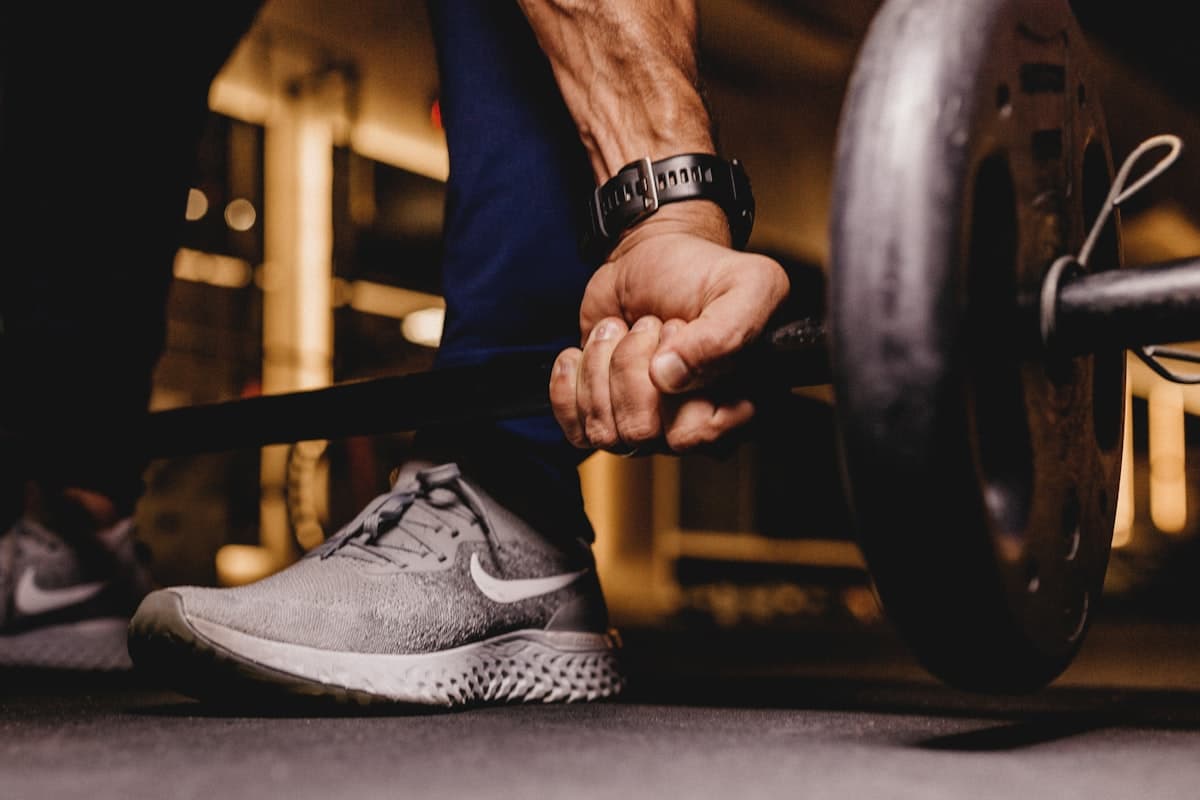
Getting injured isn't inevitable
There's a persistent received idea: lifting would be dangerous for the body. It's false. Available data show that supervised lifting, with correct technique, has a low injury rate compared to many team sports like soccer or rugby.
But low doesn't mean zero. Most lifters eventually encounter discomfort in the shoulder, lower back or knee. The good news is that the vast majority of these injuries are avoidable overuse injuries — not accidents. Understanding their causes means being able to prevent them.
The real nature of lifting injuries
Contrary to the image of the powerlifter tearing a muscle under a maximal load, most lifting injuries aren't sudden, spectacular accidents. They're cumulative injuries that develop gradually.
The mechanism is almost always the same: a repeated stress slightly greater than what the tissue can tolerate, applied session after session. Imperfect technique, too-fast progression, a muscle imbalance or insufficient recovery create chronic stress. One day, the pain appears — but the problem had set in well before.
The three most affected areas are:
- The shoulders: the most mobile joint in the body, therefore the most unstable
- The lower back (lumbar): engaged on almost all big exercises
- The knees: taxed on all lower-body work
Lever 1: technique before load
This is the most important principle of prevention. Correct technique distributes the load across the structures designed to support it; poor technique concentrates the stress on vulnerable areas.
The classic beginner mistake — and that of many advanced lifters driven by ego — is to load heavy before mastering the movement. The result: a rounded-back deadlift, a knees-caving squat, a poorly positioned bench press. Each of these faults concentrates excessive stress on a joint.
In practice:
- Learn each movement with moderate loads before progressing
- Film yourself from the side regularly on big exercises: the best self-correction tool
- On the deadlift and squat, keep a neutral back and solid bracing, non-negotiable
Lever 2: gradual progression
Progressive overload drives progress, but too-fast progression is one of the leading causes of injury. Muscles adapt quickly to increasing loads; tendons and ligaments, however, adapt more slowly. Increasing weight too abruptly creates a mismatch: your muscles can lift more, but your tendons don't keep up yet.
That's why small-step increases (2.5 to 5% when all sets are clean) are not only more sustainable, but also safer. Patience protects as much as it drives progress.
Lever 3: the warm-up
A structured warm-up prepares the body for effort and reduces injury risk. It raises muscle temperature, activates the nervous system and lubricates the joints.
The effective structure: a few minutes of general activation (light cardio), targeted dynamic mobility, then progressive warm-up sets on the first big exercise. Conversely, prolonged static stretching before exercise reduces strength temporarily and has shown no protective effect — save it for after the session.
Lever 4: muscle balance
An imbalance between antagonist muscle groups is a common cause of injury, particularly in the shoulder and knee. The typical case: a lifter who multiplies presses (chest, front shoulder) but neglects the back and rear head. This imbalance pulls the shoulder forward and promotes pain.
To protect yourself:
- Balance the volume of pushing (presses) and pulling (rows, pull-ups)
- Don't forget the hamstrings against the quads to protect the knee
- Work the rear head of the shoulder, often the most forgotten
Lever 5: recovery
An overuse injury is, by definition, a tissue that didn't have time to recover between stresses. The link with overtraining is direct: when fatigue accumulates beyond your recovery capacity, injury risk climbs.
The pillars remain the same: 7 to 9 hours of sleep, enough protein and calorie nutrition, and programmed deload weeks every 6 to 10 weeks. These deloads aren't a weakness: they let tissues repair and prevent the accumulation that leads to injury.
Pain or simple discomfort: knowing the difference
Not all discomfort is an alarm signal, but you must be able to distinguish:
- Normal discomfort: diffuse soreness, feeling of effort, muscle fatigue. Acceptable.
- Pain to watch: sharp, localized joint pain that worsens during effort or persists several days. This is a stop signal.
The golden rule: never load a joint sending sharp pain. Continuing often turns a minor discomfort into a lasting injury. When in doubt, reduce the load, change exercise, or consult a healthcare professional.
Summary
- Lifting done well has a low injury rate; most injuries are avoidable
- They're mainly gradual overuse injuries, not accidents
- Technique before load: the most important lever
- Progress gradually: tendons adapt more slowly than muscles
- Warm up, balance push/pull, respect recovery
- Distinguish normal discomfort from joint pain: never load a painful joint
This article is for informational purposes and doesn't replace the advice of a healthcare professional. In case of persistent pain, consult a doctor or physiotherapist.
Training for years is the real secret of progress. A physique is built over years: protect your body, and it will pay you back by letting you progress without interruption.
Frequently Asked Questions
What are the most common lifting injuries?+
The most affected areas are the shoulders, lower back and knees. Most of these injuries aren't sudden accidents, but overuse injuries that develop gradually due to imperfect technique, too-fast progression or insufficient recovery.
How do you avoid getting injured in the gym?+
The most effective levers are: mastering technique before adding load, applying gradual progression, warming up properly, balancing muscle groups, and respecting recovery. The vast majority of lifting injuries are avoidable overuse injuries, not accidents.
Should you train despite pain?+
You must distinguish normal muscle discomfort (soreness, feeling of effort) from sharp, localized or worsening joint pain. The first is acceptable, the second is a stop signal. Continuing to load a painful joint often turns a minor discomfort into a lasting injury.
Is lifting dangerous for the joints?+
No, on the contrary. Practiced with correct technique and suitable progression, lifting strengthens the muscles, tendons and bones, and protects the joints over the long term. Data show that supervised lifting has a low injury rate compared to many team sports.
A strength training enthusiast for over 6 years, I write every article starting from meta-analyses and primary studies — not forums or sponsored magazines. Learn more