Muscle Building for Women: The Complete Guide (Without the Fear of "Getting Too Bulky")
Can women build muscle without losing their feminine physique? Yes — and the process is different from men's. Hormones, adapted training, nutrition, and realistic expectations.
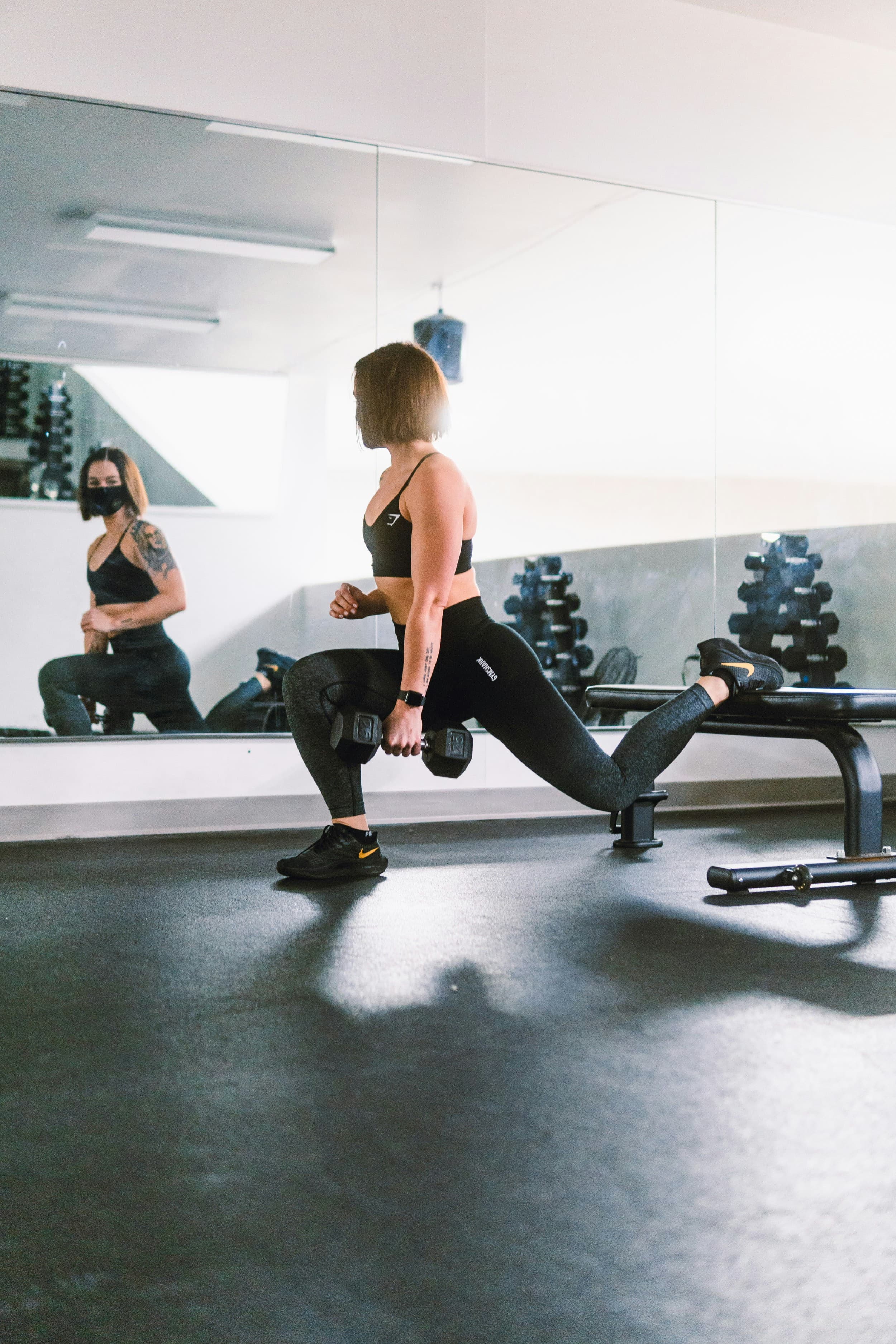
Fear #1: "I'll Get Too Bulky"
This is the most common concern among women starting strength training. The reality: getting "too bulky" accidentally is biologically impossible.
The primary hormone responsible for developing massive muscle is testosterone. Men have 15-20 times more than women. Professional female bodybuilders with extremely muscular physiques developed them over years, sometimes decades of very intensive training, often with pharmacological assistance.
In natural training, a woman can expect to gain 8-18 lbs (4-8 kg) of muscle mass in the first year (a man gains 17-35 lbs / 8-16 kg). That's not "too much" — it's precisely what gives that toned, athletic, feminine physique most women actually want.
Physiological Differences: Men vs Women in Strength Training
What's Different
Hormones: Less testosterone → slower but proportionally well-shaped muscle gains. More estrogen → better pain tolerance, better recovery between short efforts.
Muscle fiber types: Women have proportionally more Type I fibers (endurance fibers) → often better response to higher volumes and moderate rep ranges (8-15 reps).
Body fat percentage: The female body naturally maintains a higher fat percentage (10-15% essential fat vs ~3% for men). Essential hormonal and reproductive fat cannot be lost without hormonal consequences.
What's Identical
- Muscle growth mechanisms (protein synthesis, progressive overload)
- Protein needs per kilo (1.6-2.2 g/kg)
- The importance of calorie deficit/surplus for body composition
- Response to sleep and recovery
Adapted Program for Beginner Women
Key Principles
- 3 days/week frequency (Full Body) to start
- Emphasis on lower body and back exercises (often priority aesthetic and functional goals)
- Moderate to high rep ranges (8-15 reps) — suited to female muscle fibers
- Progressive overload (same principle as men — this is where everything happens)
Full Body Program 3x/Week (Beginner Women)
| Exercise | Sets | Reps | Rest |
|---|---|---|---|
| Squat (barbell or goblet) | 3-4 | 8-12 | 2 min |
| Hip Thrust | 3-4 | 10-15 | 90 s |
| Dumbbell Bench Press | 3 | 10-12 | 90 s |
| Single-Arm Dumbbell Row | 3 | 10-12 | 90 s |
| Walking Lunges | 3 | 10/side | 90 s |
| Lat Pulldown | 3 | 10-12 | 90 s |
| Plank | 3 | 30-60 s | 60 s |
After 3-6 Months: Transition to Upper/Lower or 4-Day PPL
Nutrition for Female Muscle Gain
The "Lean Bulk" Calorie Surplus for Women
An overly aggressive surplus in women can lead to faster fat storage (hormonal sensitivity to adipocytes). Recommendation:
- Moderate surplus: 150-300 kcal above TDEE
- Target weight gain: 0.2-0.4 lbs (0.1-0.2 kg) per week
- Slower than men, but less fat accumulated
Protein Needs
Same as men: 1.6-2.2 g/kg of body weight per day. For a 130 lb (60 kg) woman: 95-130 g protein/day.
Carbohydrates and the Menstrual Cycle
Female metabolism varies according to hormonal cycle phases:
Follicular phase (days 1-14): High insulin sensitivity → carbohydrates used more efficiently. Ideal period for the most intense sessions.
Luteal phase (days 15-28): Slight increase in basal metabolic rate (~100-150 kcal more), slight insulin resistance, stronger cravings. Slightly increasing protein can help manage hunger.
Supplements Worth Considering for Women
- Whey protein: if dietary protein intake is insufficient
- Creatine: equally effective in women as men (solid evidence), no androgenic effects
- Omega-3s: anti-inflammatory, beneficial for mood (PMS) and body composition
- Vitamin D + magnesium: often deficient, impact on energy, recovery, and hormonal function
- Iron: watch levels in women of childbearing age (menstrual losses)
Realistic Results Over 12 Months
| Period | What Happens |
|---|---|
| Weeks 1-4 | Rapid neural gains (strength without visible mass), learning movement patterns |
| Months 2-3 | First visual changes (tone, definition) |
| Months 4-6 | Visible mass gain, silhouette transformation |
| Months 7-12 | 8-18 lbs (4-8 kg) lean mass gained, significant transformation |
FAQ
"Will I lose my curves?" On the contrary — lifting creates curves. Glutes, thighs, round shoulders — that's muscle. You won't become rectangular.
"The scale isn't moving but I'm transforming — is that normal?" Yes. "Body recomposition" (losing fat while gaining muscle simultaneously) is especially common in beginner women, even without significant calorie surplus.
"Are 'feminine' exercises (yoga, Pilates, Zumba) enough?" For general health, yes. For muscle building and body remodeling, no. Progressive overload with weights is irreplaceable.
"Will creatine make me look manly?" No. Creatine has no androgenic effects. It increases intramuscular water retention (in the cells, not subcutaneously) and improves strength. It's among the most evidence-backed supplements for women.
Summary
- Female muscle building will not make you "too bulky" — it's biologically unfounded
- Expected results: 8-18 lbs (4-8 kg) of muscle in year 1 with serious training and nutrition
- Same protein needs as men: 1.6-2.2 g/kg/day
- Moderate calorie surplus: 150-300 kcal (less aggressive than for men)
- Program: 3x/week Full Body → 4-day Upper/Lower
- Creatine is equally effective in women (and doesn't masculinize)
Scientific references
A strength training enthusiast for over 6 years, I write every article starting from meta-analyses and primary studies — not forums or sponsored magazines. Learn more