Squat: Complete Technique Guide for Powerful Legs
The squat is the king of lower-body exercises. Depth, foot placement, bracing: here is everything you need to know to perform it correctly and progress without injury.
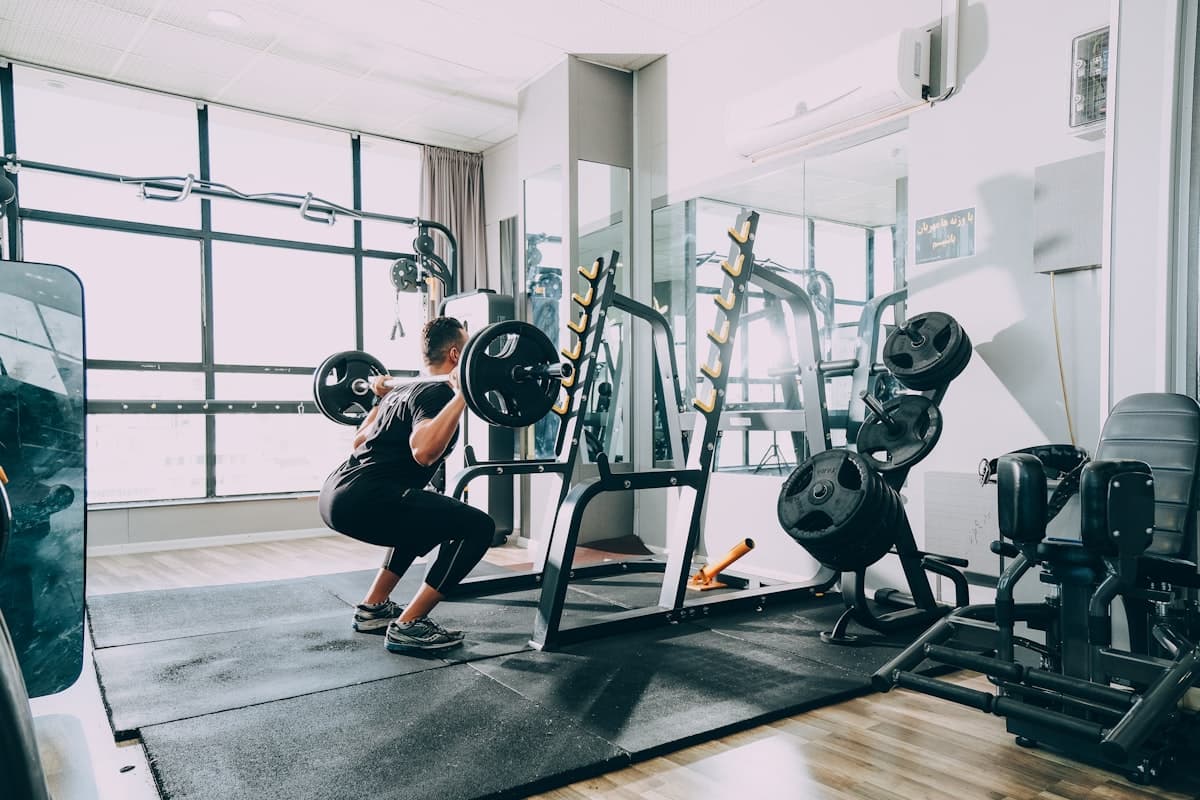
The squat, foundation of the lower body
They call it the king of exercises, and it's no accident. The squat recruits the quads, glutes, hamstrings and the entire core in a single movement. No other exercise builds as much strength and mass in the lower body. It's a fundamental movement your body is designed to perform — you just have to do it correctly.
The starting setup
Before descending, build a solid base:
- Bar resting on the upper traps (high-bar squat), not on the cervical spine
- Hands in a firm grip to stabilize the bar, elbows under the bar
- Feet roughly shoulder-width apart, toes slightly turned out (15 to 30°)
- Gaze straight ahead, chest proud
- Bracing engaged: deep breath, abdomen tight before descending
The descent: where it all happens
Initiate the movement by simultaneously pushing the hips back and bending the knees. Think of "sitting between your heels" rather than backward. Key points:
- The knees track the line of the feet (outward), they never cave inward
- The weight stays distributed across the whole foot, with slight emphasis on the heels
- The back stays neutral: neither rounded nor overly arched
- Descend at minimum to parallel (thighs horizontal), lower if mobility allows
Control the descent over 2 to 3 seconds. A rushed descent loses bracing and control.
The ascent
Push hard into the floor to rise, keeping the chest up and the knees in line with the feet. The bar should follow a vertical path over the middle of the foot. Exhale as you pass the hardest point. Lock out at the top without hyperextension.
Common mistakes
- Knees caving inward (valgus): a sign of weak glutes or lack of focus. Think of "spreading the floor" with your feet.
- Heels lifting: lack of ankle mobility. Work on it, or use shoes with a raised heel.
- Back rounding at the bottom (butt wink): often from descending too deep for your current mobility. Reduce the range until it improves.
- Torso tipping too far forward: insufficient bracing or poorly placed bar.
The knees-and-toes myth
You've surely heard that "the knees must never pass the toes." That's an outdated idea. During a correct squat, slight knee travel past the toes is natural and safe, especially for people with long femurs. Forcing the knees to stay back only shifts excessive strain onto the lower back. What truly matters is keeping the back neutral and the weight well distributed.
Mobility, often the limiting factor
Many lifters are held back not by their strength, but by their ankle and hip mobility. If you tip forward or can't descend deep, add specific warm-up work before your squats. A few minutes of ankle and hip mobility transform movement quality.
Progressing on the squat
- Work in 5 to 8 reps for strength, 8 to 12 for hypertrophy
- Add weight only when all your reps are clean and deep
- Keep 1 to 2 reps in reserve on most sets
- Film yourself from the side occasionally: the best way to check your technique
Summary
- The squat is the foundational lower-body movement
- Feet shoulder-width, toes slightly out, knees tracking the feet
- Descend at minimum to parallel, neutral back, weight across the whole foot
- Knee travel past the toes is normal, the reverse myth is outdated
- Work on your mobility if it limits you
- Progress while keeping technique flawless before load
The squat is learned patiently but rewards generously. Master the movement, and it will become the engine of your lower-body progress.
Frequently Asked Questions
How low should you squat?+
At minimum until the thighs are parallel to the floor, ideally a little lower if your mobility allows. Squatting below parallel recruits the glutes and hamstrings more. The key is keeping the back neutral throughout the range of motion.
Does squatting damage the knees?+
No, a correctly performed squat strengthens the knees and the structures around them. The myth that knees must not pass the toes is outdated: slight passage is natural and safe, as long as the weight stays distributed across the whole foot.
High-bar or low-bar squat?+
High-bar (on the traps) favors a more upright position and targets the quads, ideal for most lifters. Low-bar (on the rear delts) lets you load heavier and works the posterior chain more, favored in powerlifting.
Why do I lean forward in the squat?+
Most often from a lack of ankle mobility or insufficient bracing. Work on your ankle mobility, consider shoes with a slightly raised heel, and make sure to brace well before each rep. Descending too fast without control also worsens the problem.
A strength training enthusiast for over 6 years, I write every article starting from meta-analyses and primary studies — not forums or sponsored magazines. Learn more