Are BCAAs Really Worth It? What the Science Says
BCAAs are among the best-selling supplements in fitness. But are they actually effective, or just a marketing product? The scientific answer is unambiguous.
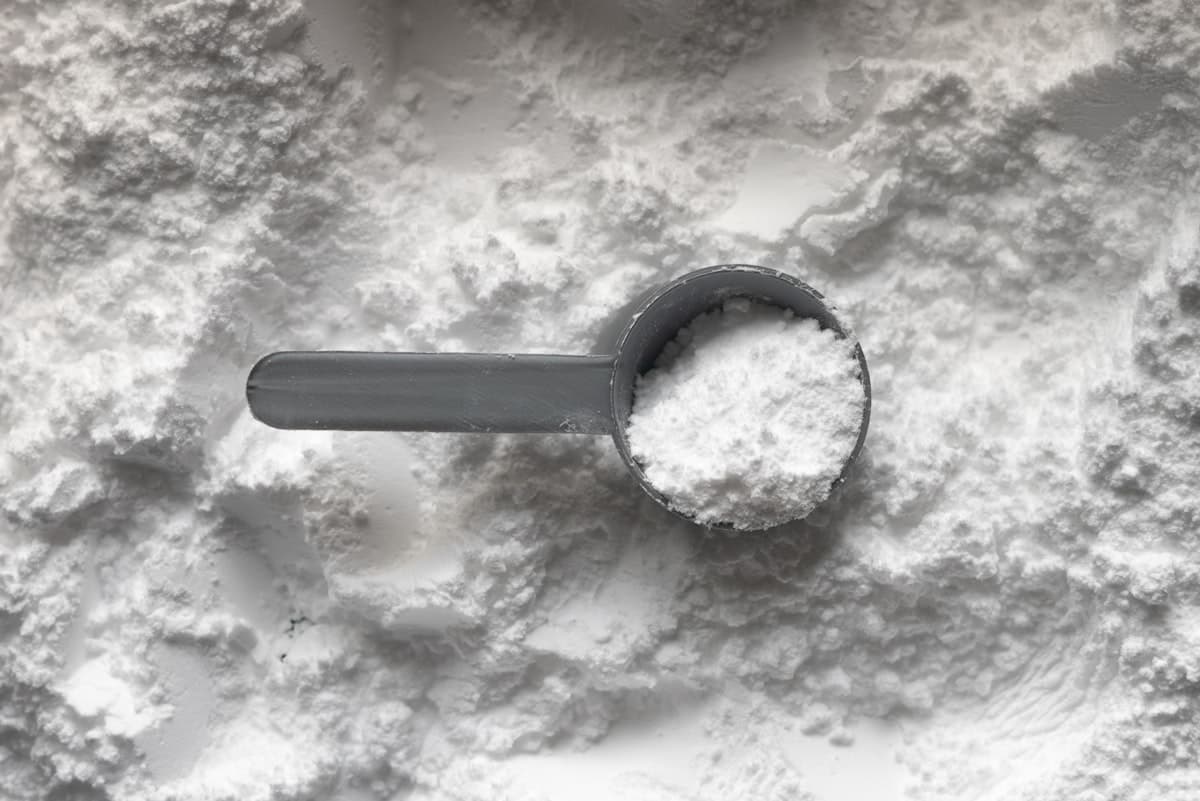
The most overrated supplement in fitness
Walk into any supplement store and you'll see entire walls of BCAAs in flashy colors with enticing promises. BCAAs — Branched-Chain Amino Acids — are among the industry's best-selling products. Yet the science is clear: for the vast majority of lifters, they're useless.
Let's see why, no sugarcoating.
What are BCAAs?
BCAAs group three of the nine essential amino acids: leucine, isoleucine and valine. They're called "branched" because of their chemical structure. Leucine in particular plays a key role: it's the main trigger of muscle protein synthesis via the mTOR pathway.
This is the argument all BCAA marketing rests on: "leucine stimulates muscle building, so take BCAAs." The problem is that this reasoning is incomplete.
The central problem: synthesis needs all nine
Here's the fact the industry prefers not to highlight: muscle protein synthesis requires all nine essential amino acids, not just the three BCAAs.
Leucine may "trigger" the muscle-building signal, but if the other six essential amino acids are missing, the body can't build complete muscle protein. It's like starting a factory's engine without supplying all the materials: the signal is there, but construction doesn't follow.
A reference study (Wilkinson et al., 2017) even showed that BCAAs alone produce a lower protein synthesis response than a complete protein like whey.
If you eat enough protein, you already have your BCAAs
This is the decisive argument. BCAAs are naturally present in all complete protein sources: meat, fish, eggs, dairy, whey. If you already consume 1.6 to 2.2 g of protein per kilo of bodyweight, as recommended for training, you already absorb plenty of BCAAs.
Adding a BCAA supplement on top means adding something your body already has in abundance. The money would be better invested elsewhere — or nowhere.
Whey: superior on every front
Let's compare directly:
| Criterion | BCAA | Whey |
|---|---|---|
| Essential amino acids | 3 of 9 | 9 of 9 |
| Protein synthesis | Partial | Complete |
| Cost per useful dose | High | Lower |
| Caloric/protein contribution | Near zero | Real |
On every line, whey wins. If you're looking for a supplement to support muscle building, a serving of whey is consistently a better choice than a scoop of BCAAs.
The one (very) marginal case
Is there a situation where BCAAs might have a benefit? One, and it's rare: prolonged fasted training, with no protein source available before or during the session. In that very specific case, BCAAs could theoretically limit muscle catabolism.
But even there, EAAs (complete essential amino acids, all nine) or simply a small dose of whey would do the job better. So the BCAA use case is both rare and already better covered by other options.
Where to put your money instead
If you want to invest in genuinely useful, science-backed supplements, here are the priorities:
- Creatine monohydrate: the most studied and most effective supplement for strength and mass
- Whey: convenient for hitting your protein targets
- Vitamin D and omega-3: useful if your diet is deficient
BCAAs appear on no serious priority list.
Summary
- BCAAs contain only 3 of the 9 essential amino acids
- Muscle synthesis requires all nine, not just leucine
- If you eat enough protein, you already have your BCAAs
- Whey is more complete, more effective and cheaper per useful dose
- The one marginal case (prolonged fasting) is better covered by EAAs or whey
Save your money. Eat enough protein, supplement with creatine if you want a boost, and forget BCAAs. It's one of the rare topics in sports nutrition where the verdict is this clear.
Frequently Asked Questions
Are BCAAs any good?+
For most lifters who eat enough protein, BCAAs provide no additional benefit. Muscle protein synthesis requires all nine essential amino acids, not just the three BCAAs. A serving of whey, more complete and cheaper, is consistently superior.
What is the difference between BCAAs and whey?+
BCAAs contain three amino acids (leucine, isoleucine, valine). Whey contains those three plus the six other essential amino acids needed for muscle synthesis. Whey is therefore more complete, more effective and generally cheaper per useful dose.
When might BCAAs be useful?+
One niche case exists: prolonged fasted training with no protein source available. Even then, EAAs (complete essential amino acids) or a small dose of protein would be preferable. For the overwhelming majority of situations, BCAAs are superfluous.
Do BCAAs help recovery?+
The evidence is weak. When total protein intake is sufficient, BCAAs do not significantly improve recovery or notably reduce soreness. Sleep, total protein and hydration have a far greater impact.
Scientific references
A strength training enthusiast for over 6 years, I write every article starting from meta-analyses and primary studies — not forums or sponsored magazines. Learn more